
“Between stimulus and response, there is a space. In that space is our power to choose our response. In our response lies our growth and our freedom.”
Viktor E. Frankl was a prisoner in Nazi concentration camps during World War II and lived to chronicle his experiences in his book Man’s Search For Meaning, published in 1946. Frankl was a psychiatrist who developed Logotherapy, which is a therapeutic approach that helps people find personal meaning in life. It’s a form of psychotherapy that is focused on the future and on our ability to endure hardship and suffering through a search for purpose. Frankl endured terrifying events, some of which he describes in his book, and lived to offer the world his thoughts. Through the horrors of death, Frankl offers advice on life. He offers advice on how to pursue true happiness in all situations. The lessons he teaches, acquired through harsh suffering, loss, and indignity, are truly an inspiration. His book, called “one of the great books of our time,” has been translated into more than 50 languages and has sold over 16 million copies. Frankl’s teachings implore us to endure the negative events that happen in our lives and to essentially “move on” in search of what we can learn from the disappointments. I am of course drastically simplifying, but the lessons remain.
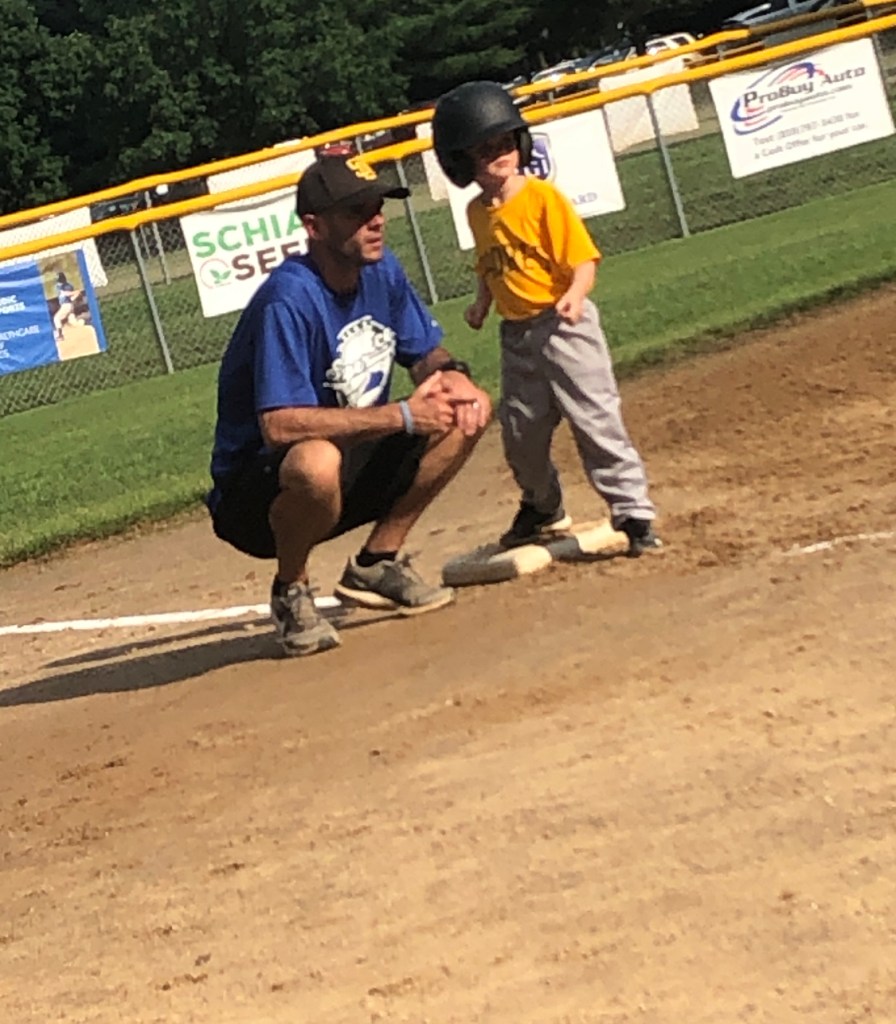
As a teacher and a baseball coach at both the high school and youth levels, I am blessed to have the opportunity to interact with so many young student athletes. My goal is to serve them in any capacity that will allow them to grow as a human being first, and as a baseball player second. The reason sports, baseball in particular, is so important to me is because it gives young people the chance to learn valuable life skills that will help them long after they have hung up their cleats. The quote from Frankl’s book teaches one of these lessons. How can we navigate the space between a stimulus and response? How do we deal with failure? How do we experience something negative, and turn it into something positive? Most importantly, how do we teach this to our young people?
Legendary baseball coach Augie Garrido said “baseball is nothing more than another classroom in the educational process. Really, baseball is a metaphor for life. It offers the opportunity to communicate on how to solve problems. It is not a game of failure, but a game of opportunity.” That’s why I love baseball. The game constantly affords us the chance to teach life lessons and this lesson is paramount. How do we respond when something happens that we don’t like? Baseball is a game where success is fleeting. It is hard. It involves making errors, striking out, not getting a hit, not playing enough, not starting, etc. It’s also a slower paced game with a lot of down time that allows our minds to think about those mistakes, dwell on them, and worry. This can cause an emotional train wreck, especially if a player is not equipped to handle it. I have seen numerous youth players crying during practices or during games because they struck out, because they made an error, or because they didn’t get to play. I have witnessed players cursing, helmets being thrown, and players lashing out at teammates. They didn’t know how to control their response to a negative stimulus and in turn, embarrassed their parents, hurt their teammates, and ultimately hurt themselves.
Many young student athletes today lack the ability to deal with negative events in their lives, but it’s really not their fault. They are kids and teenagers encountering new experiences for the first time. They are losing for the first time. They are failing for the first time, and they don’t know how to deal with it. That’s where we must intercede. We, as parents, coaches, role models, mentors, etc. must give them some tools to deal with these new experiences and teach them how to navigate “the space between stimulus and response.” I would argue that teaching this skill to our young people is one of the most important lessons we can teach.
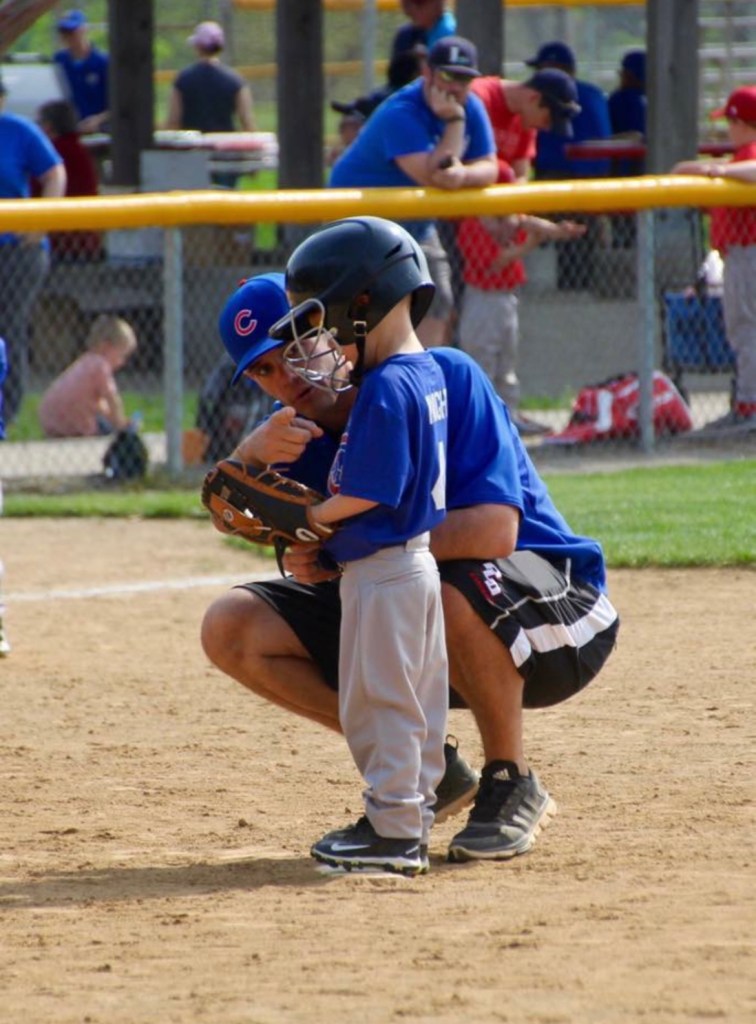
Player A strikes out on a called third strike that he thinks is a ball (stimulus), he walks back to the dugout (space between), and throws his helmet against the dugout wall while complaining “that wasn’t a strike…” with tears streaming down his face (response). Same situation for Player B, but he walks back to the dugout, places his helmet in his bag, and begins cheering for his teammate now up to bat. What’s the difference? Why the different responses? Sure, there are a number of things in play here. Different kids, with different personalities. Maybe Player A is more emotional and plays with a more aggressive attitude, while Player B is more laid back and passive. Maybe Player B is used to striking out and Player A is not. Maybe Player A had a really bad day and is in a bad mood. But that is the point. We are all different and in life we are all going to have bad days. We are all going to be in a bad mood. We are all going to “strike out.” How we respond is a conscious choice that will either allow us to grow and learn, or drag us down further towards negativity. The earlier we can teach our young people this skill, the better they will be equipped to handle life in the future. Baseball gives us this tool. There is not another sport, job, or profession where a 40% success rate is acceptable (maybe weathermen) and in baseball those would be Hall of Fame credentials. So, what tools does Player A need to be more like Player B? How can he navigate that space and choose a response that allows him to grow?
Let me be clear, I am not asking for players to be happy about a strikeout or an error. Being upset and frustrated shows they care and that is a good thing, but being able to manage that frustration is the key. In general, players must first understand that one at bat or one error does not define them as a player and certainly not as a person. Teach them to play the game one pitch at a time. Teach them that strike outs and errors are going to happen. Most importantly, as parents, don’t get mad and frustrated with them about their performance on the field (sadly, this happens too often). After a game, only discuss the game if they bring it up. If not, tell them you love them, and tell them you are proud of them. The game is hard enough without feeling pressure as soon as they get in the car to ride home.
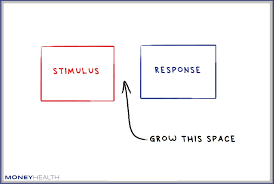
In a specific moment, the first and most important step to managing emotions is to focus on your breath. Pick a focal point (it could be your left index finger, the toe of your right shoe, etc.) and breathe deeply through your nose and out of your mouth. This will decrease your heart rate and help calm you down. The next step is to evaluate what happened (the stimulus) and ask yourself two questions. 1. Why did it happen? 2. How can I prevent it from happening again or how can I do better next time? In essence, what can I learn from this stimulus, which in turn will help me grow and give me freedom from this frustration? This is a process that has to be learned and practiced. They have to know how and when it needs to be done and this is the hardest part because players’ gut reactions often happen quickly. This is the “space between,” directly after the strikeout and before the helmet throw. If a player can exercise the power they have to choose the appropriate response, the helmet throw will not happen. The tears will not happen. It is an opportunity, as Coach Garrido would say, to learn from mistakes and grow for the future, but they will need help.They will need to be reminded again and again until they learn to recognize a negative response and understand how to fix it. That is why it must be practiced, just like ground balls, fly balls, batting practice, etc.
Player A may ask himself questions like, Did I swing at bad pitches? Did I take my eyes off the ball? Do I need to expand the strike zone because the umpire is calling it outside? Once the answer is determined, the next step is to utilize positive self talk (PST) which involves creating positive imagery in a person’s brain. In all of the down time the game affords, the voice of doubt (VOD) will try to take over a player’s brain implanting negative images. As renowned baseball instructor Nate Trosky says, “the PST must be greater than the VOD.” Player A needs to use positive phrases like “Focus on the ball,” “barrel it up”, or “hunt fastballs.” It will serve the player much better than “don’t strike out again.” One puts a positive image in the players mind, while the other only reminds them of the negative stimulus and positive thoughts help to produce positive actions.
Another tool is to make sure players are focused on their teammates and not on themselves. A player worrying about his batting average instead of his team’s winning percentage is only putting extra pressure on himself. After a strikeout like this, cheering on a teammate will shift the focus away from the “negative” stimulus and help the player move on more quickly. Positive reinforcement from coaches and parents will also help avoid challenging behavior. This doesn’t mean yelling “good job” when it isn’t actually a good job. It means helping the player understand why the negative stimulus occurred and helping them learn how to avoid it in the future. Teaching these skills to our young people is paramount in their development, but so is demonstrating the same skills for our young people to see.
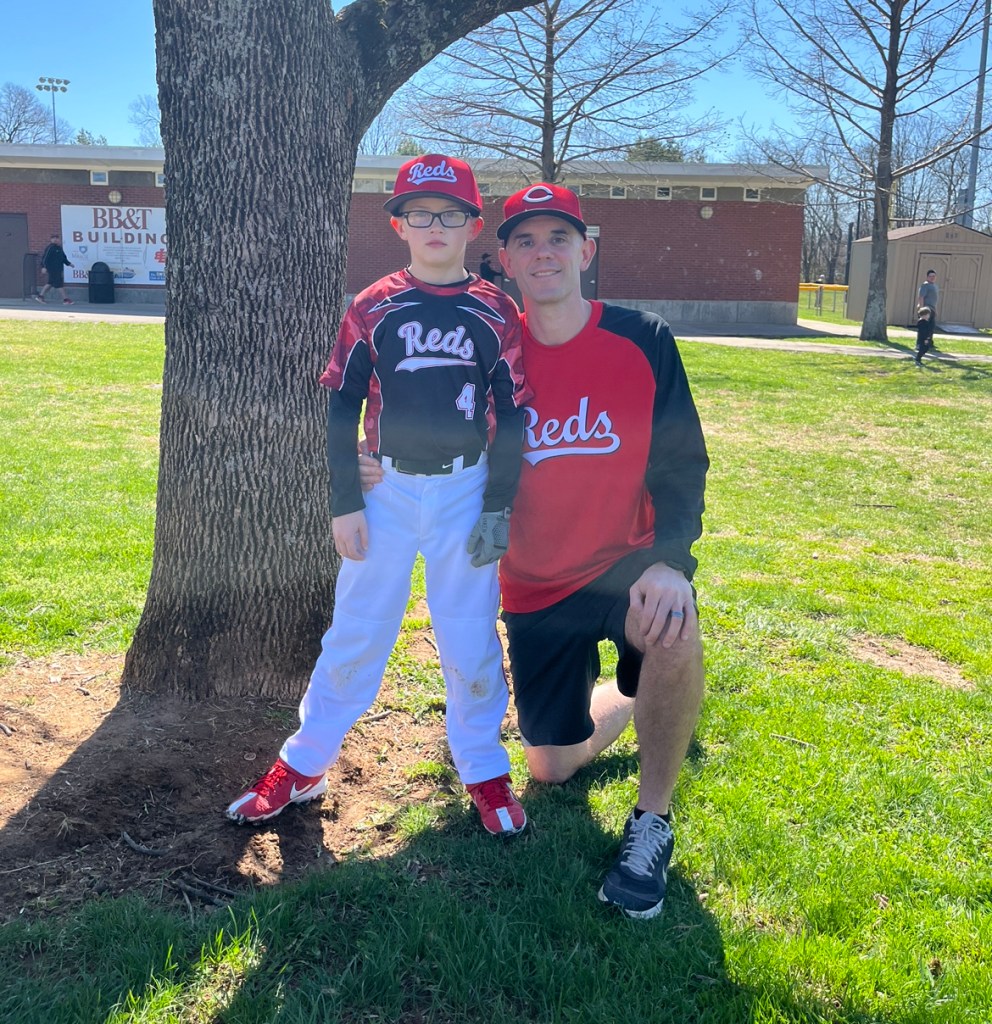
We all have the power to choose. We all have the ability to control what we can control or to let our emotions control us. Do I throw my helmet because I struck out, or do I cheer on my teammate and figure out how to be better the next time. My son is a 9 year old playing in his first year of “majors” for ages 9 through 12. Since tee-ball, the 9’s that made majors have always been the better players on their respective teams. They have always started, always played infield, and always been in the top of the batting line-up. Now for the first time, they are in a different world. The 11 and 12 year olds dominate and the 9’s are being forced to learn quickly. They are learning different positions, learning the speed of the game, and learning how far a 6 foot, 200 pound 12 year old can hit a baseball. It is a chance to grow. It is a chance to learn the game by watching older players. It is a chance to learn what it is like to sit on the bench. It is an opportunity to teach them how to be a great teammate and how to be ready when their opportunity comes. Then when that opportunity often produces results they aren’t used to (strikeouts, errors, hard hit balls that now get caught) another and most important lesson can be learned. Challenging behavior occurs when the demands and expectations being placed upon a child outweigh the skills they have to respond. Beneath every behavior there is a feeling and beneath every feeling there is a need. They need to learn the skills to respond to adversity. They need to learn how to grow and play with freedom from expectations. They need to learn the tools to manage the space between, and it is our job to teach them.



 separate-yourself.com
Leave a reply to Patrick Cancel reply